Ask any student which subject they dread the most and….no prizes for guessing. Most likely you will hear – “Maths” , almost as if it is some dreaded monster lurking under the time table, waiting to take you on.
Maths Momster
The Monster That Lurks Everywhere
Ask any student which subject they dread the most and….no prizes for guessing. Most likely, you will hear – “Maths” , almost as if it is some dreaded monster lurking under the time table, waiting to take you on.
The panic I have seen before each maths test throughout my middle year and now high school years is very real. In fact it won’t be wrong the say that the fear is almost ritualistic before every maths exam/ test or assignment – sleepless nights, cramming formula , funnily sometimes even attempting to categorise questions one way or the other and then trying to memorise the steps to solve each of the “type” of question.
And yet who can deny that maths forms the foundation for so many other subjects? Physics, economics, engineering , comp science – all stem from mathematical concepts. Even creative domains such poetry, art , music and dance are rooted in Maths . Heard about rhymometers, bars, rhythm – all are but extensions of mathematical concepts – numbers, patterns, sequences. It then won’t be wrong to say , maths is everywhere , like it , hate it – you cannot escape it.
Now I am by no saying that I am immune to anxiety – there are always countless fluttering butterflies in my tummy before any exam. However, being friends with any subject , especially subjects like maths (where no amount of categorisation , cramming or last minute prep can help), has worked for me is being friends with the subject. Somewhere along the way, maths actually became my stressbuster rather than a stressor. Once , I mastered the art of looking at difficult questions from the lens of another puzzle that needed to be cracked – it began to resemble more like a game than a subject related obstacle.
Making Friends
Looking back, that shift happened early – thanks to our lovely early years enthusiastic teachers, who left no stone unturned to make learning immersive, playful and connected. I still remember learning number lines through a fun “walking on the line” game – forward and backwards, instilling the concepts of positive and negative numbers.
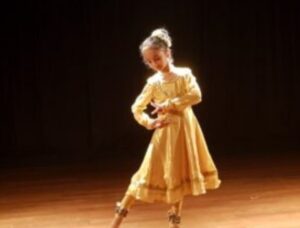
Coming to multiplication, tables were memorised rather than understood through modified versions of playground games, while addition and subtraction were taught through either colourful beads or rajma seeds scattered across desks. In fact, looking back, games like “Monopoly” and “Ludo” served not only as a source of endless childhood squabbles and giggles but also went a long way in introducing concepts like probability, counting, and strategy. As I grew older, I unconsciously devised my own ways of incorporating and engaging with maths – scavenger hunts – my trademark for celebrating a close friend’s birthday were designed with riddles that required deduction, pattern recognition and cracking simple cryptographs. Over long car drives, our family would play a game of remembering numbers on the vehicles that passed by my making all sorts of connections – that probably was an early introduction to Arithmetic/Geometric Sequences. As I became immersed in dance – kathak and ballet – I saw maths everywhere – in taalas , in rhythm , in time signature , in music, in breaking and understanding of dance sequence – whether Chakkar of Kathak or turns in Ballet.
At the time, none of this was labelled as “learning mathematics.” It was simply play. But that play built intuition. It trained my brain to see maths as something alive, something that moved and changed, rather than a static list of rules waiting to trap me.
Teaching Through Dance - Full Circle
Life circled back to that idea in an unexpected way. I mentor a group of underprivileged kids aged between 6 to 14 years, sharing with them the joy of movement and performance and in turn absorbing much more from them – the power of unbridled enthusiasm and eagerness to learn. The kids meet me every Sunday evening – after 2 hours of dancing, we share not only snacks together but also our challenges, excitements, victories and worries.
During one such evening, a few of the kids told me about their forthcoming exams and their most dreaded subject – “Maths”. A little more chat and the most fearsome topics for each one came tumbling out, ‘fractions’ said one, ‘ratios’ another one , ‘shapes’ said a much younger one. Almost on impulse , I told them to stand in line, and just like that lesson in geometry began.
How maths became fun continues part II of this article .
This article was originally published here.